Journey: A Masterpiece in Visual Storytelling and Artistic Design
Journey: A Masterpiece in Visual Storytelling and Artistic Design
In the ever-evolving world of video games, few titles stand out as genuinely groundbreaking works of art. Journey, released in 2012 by Thatgamecompany, is one such game—a meditative experience that eschews traditional gaming tropes to deliver something profoundly unique. This blog delves into the fundamental aspects of Journey’s visual language and artistic design, exploring why it resonates so deeply with players.
1. Minimalism as a Narrative Tool
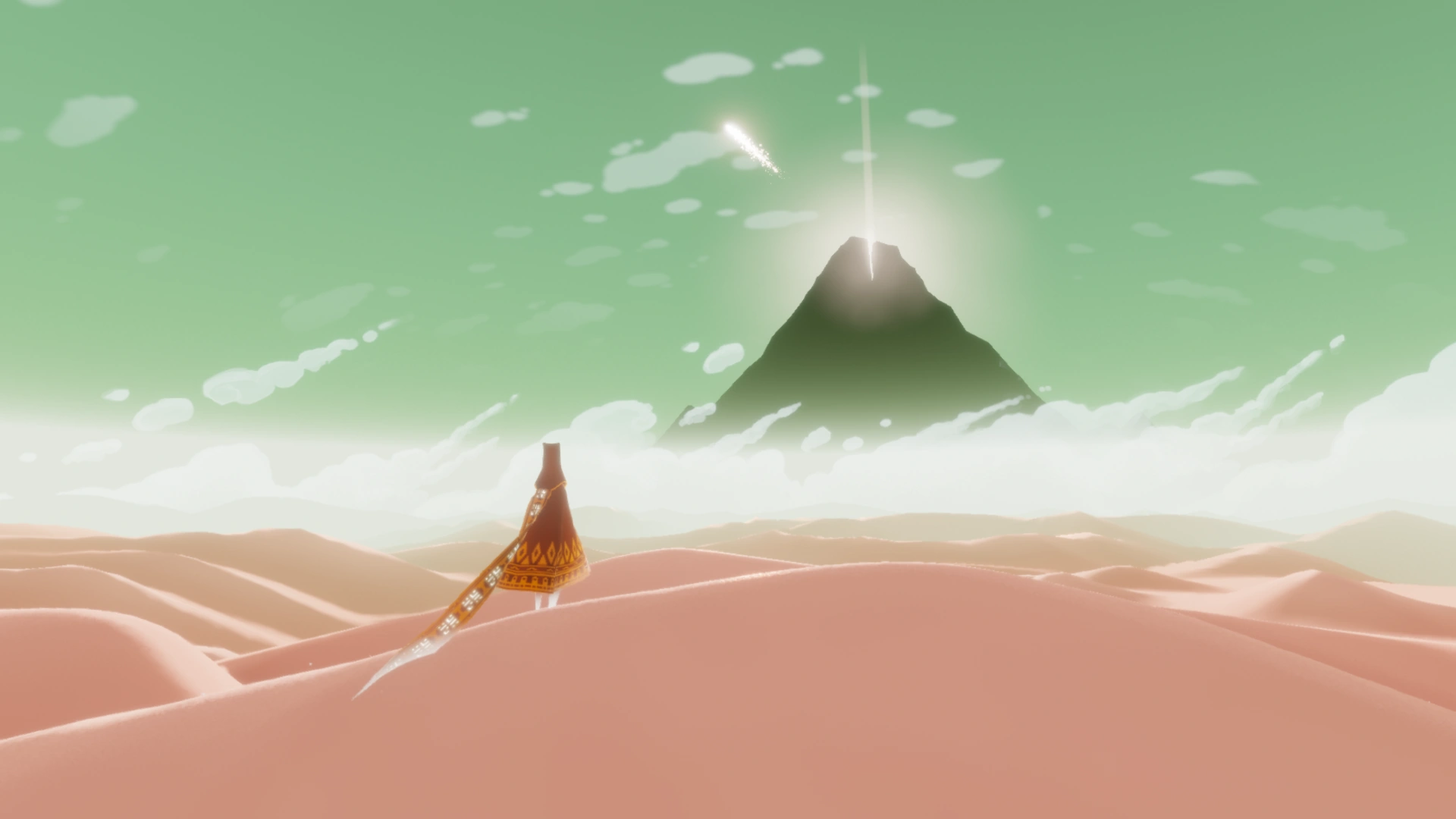
At its core, Journey is a lesson in the power of minimalism. The game discards complex narratives, dialogue, and even explicit instruction, relying instead on a universal visual language. The mysterious desert world, dominated by golden sands and surreal ruins, beckons players to uncover its secrets without saying a word. This sparseness gives players space to project their emotions and interpretations onto the journey, making each player's experience deeply personal.
The use of light, color, and environmental cues is central to this storytelling. For instance, the distant mountain peak—the ultimate destination—glows with an ethereal light, serving as a beacon of hope. This single visual goal drives the player's actions and becomes a powerful metaphor for ambition, perseverance, and spiritual transcendence.
2. Symbolism in Visual Design
Journey’s environments are drenched in symbolic meaning. The desolate ruins suggest a lost civilization, echoing themes of fragility and impermanence. The flowing scarf, which lengthens as players collect glowing symbols, is both a mechanical tool (allowing flight) and a representation of progress and growth. It subtly reminds players that even the smallest efforts can lead to great achievements.
The game’s shifts in tone—from the sun-drenched optimism of the early chapters to the harrowing, snow-covered climb near the end—mirror the trials and triumphs of life itself. Players intuitively understand these emotional beats, thanks to the game’s masterful use of visual design to evoke mood and atmosphere.
3. Collaboration Through Visual Connection
Perhaps one of Journey's most profound design choices is its seamless, wordless multiplayer mechanic. Players can encounter another traveler on their path, but they are stripped of traditional communication tools. Instead, they communicate through simple chirping sounds and movement. This mechanic encourages empathy and collaboration—players often help each other navigate challenges or share moments of quiet awe.
From an artistic perspective, this design choice reinforces the game's central themes: we are all on our own journeys, but connection and kindness can make the path easier. The anonymity of these interactions also allows players to focus on the shared experience, rather than preconceived notions about their companion.
4. The Artistry of Sound and Visual Harmony
While primarily a visual masterpiece, Journey wouldn’t be complete without its hauntingly beautiful soundtrack, composed by Austin Wintory. The music is intrinsically tied to the visuals, swelling and receding in harmony with the player's actions. This dynamic interplay creates a synesthetic experience, where sound and sight merge to amplify the emotional impact.
5. Why It Works as Art
What makes Journey so effective from an artistic perspective is its universality. By stripping away extraneous details and focusing on visual storytelling, the game transcends cultural and linguistic boundaries. It taps into fundamental human emotions: wonder, loneliness, joy, and connection. The carefully crafted visual language invites players to engage with the game on a deeply emotional level, while the symbolic design imbues it with layers of meaning.
Conclusion
Journey is more than a game; it is a work of art that leverages the medium’s unique strengths to create an unforgettable experience. Its visual language, minimalist design, and emotional depth serve as a reminder of what can be achieved when games are approached as more than entertainment. For players, it’s not just a journey through a desert, but a journey within themselves—a testament to the universal power of storytelling through art.
Comments:
2 Comments
Please be kind and respectful to others. Abusive comments will lead to a ban.
I remember doing a study on this game in college! Truly a wonderful example of visual language!
J'adore ça!